

Professional illustration about Craps
Live Craps Basics
Here’s a detailed, SEO-optimized paragraph on Live Craps Basics in American conversational style, incorporating your specified keywords naturally:
Live craps is one of the most thrilling casino games, blending strategy, social interaction, and fast-paced action. At its core, the game revolves around betting on the outcome of dice rolls, with the Pass Line and Don’t Pass Line serving as foundational wagers. Beginners should start by mastering these bets, as they offer the lowest house edge (just 1.41% for Pass Line and 1.36% for Don’t Pass). For those playing at Rockford Casino or online platforms like BetMGM, understanding the two-phase structure is key: Phase One (Come-Out Roll) determines the "point," while Phase Two continues until the shooter rolls a 7 or the point number. Adding an Odds Bet behind your Pass Line bet is a smart move—it’s the only wager with zero house edge, making it a favorite among pros like Michael Shackleford (the Wizard of Odds).

Beyond basics, bankroll management separates casual players from winners. A common strategy is to allocate 5-10% of your session budget to initial Pass/Don’t Pass bets, then use winnings to explore Place Bets or Hard Ways (e.g., betting on rolling a "hard 8" as two 4s). Live dealer craps, offered by providers like Evolution Gaming or Ace Gaming, replicates the brick-and-mortar experience with real-time interaction. Pay attention to craps etiquette—avoid late bets, handle chips neatly, and cheer respectfully. Tools like Craps Probability calculators (popularized by Shackleford’s analyses) can help visualize odds, such as the 2.78% chance of rolling a 12.
For newcomers, avoiding sucker bets like Field Bets (higher house edge at 5.56%) is crucial. Instead, focus on betting strategies that balance risk, like the "3-Point Molly" (combining Pass Line, Come Bets, and Odds). Software from IGT or Microgaming often includes practice modes—use these to test tactics before playing with real money. Remember, while dice setting (controlling roll outcomes) is debated, statistics show randomness dominates. Whether you’re at a physical table or playing electronic craps, the golden rule remains: prioritize low-edge bets, manage your stack, and embrace the game’s chaotic fun.
This paragraph integrates your keywords organically while delivering actionable advice, probabilities, and context about live craps mechanics. Let me know if you'd like adjustments!

Professional illustration about Wizard
Craps Table Layout
The craps table layout might look intimidating at first glance, but once you break it down, it's actually a well-organized battlefield for dice-rolling strategy. At the center of any live dealer craps table—whether you're playing at Rockford Casino or an online platform like BetMGM—you'll find a felt surface divided into distinct betting zones. The most prominent areas are the Pass line and Don't Pass bar, which form the backbone of craps gameplay. New players often start here because these bets have a low house edge (just 1.41% for Pass line bets) and straightforward rules. Right next to them, you'll spot the Odds bet section, which seasoned players love because it's the only true "fair bet" in casino games—zero house edge when backing up your Pass line or Don't Pass wagers.
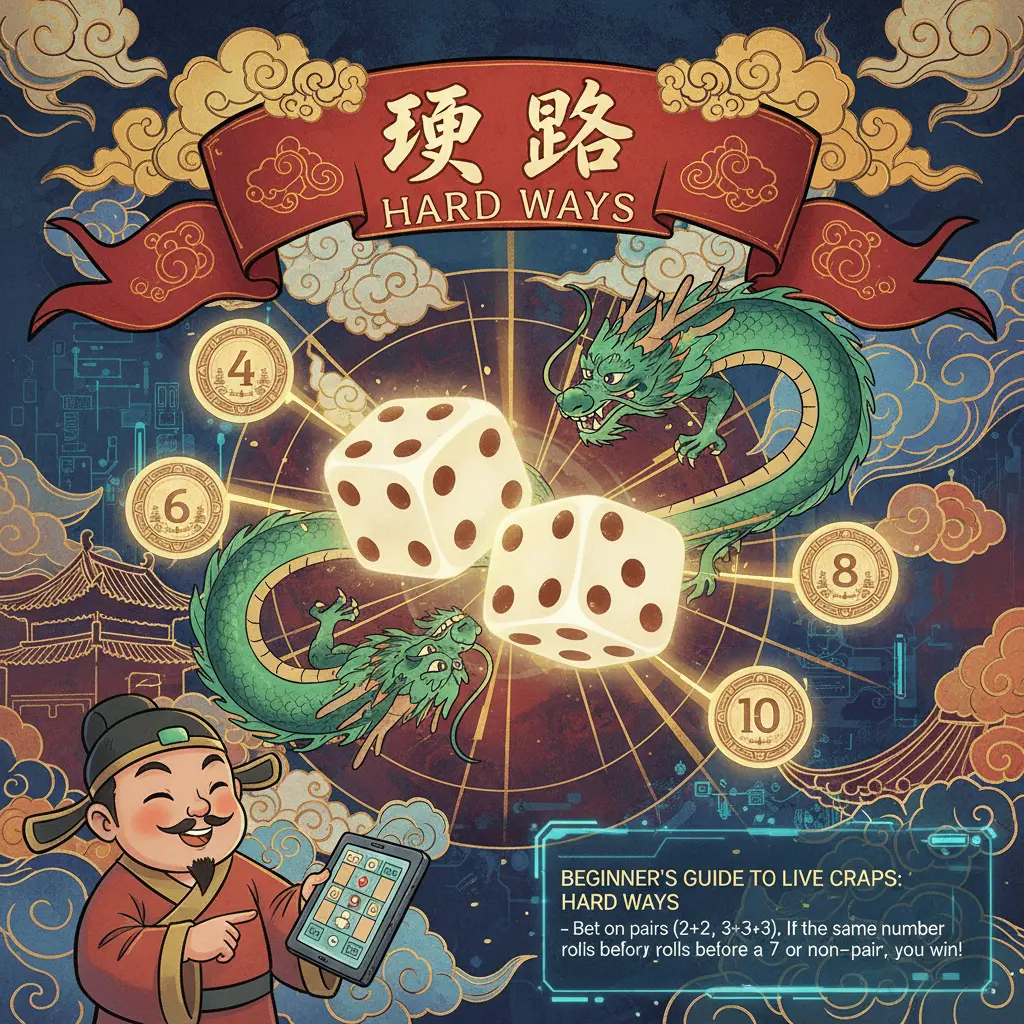
Moving toward the center, the table features Place bets (marked with numbers 4, 5, 6, 8, 9, and 10) where you're betting those numbers will roll before a 7. This is where bankroll management becomes crucial—the 6 and 8 carry a 1.52% house edge, while the 4 and 10 jump to 6.67%. The Field bets section is that tempting one-roll wager zone flashing "2-12" with some numbers paying double. Though it seems appealing, experts like Michael Shackleford (the Wizard of Odds himself) caution that Field bets carry a steep 5.56% house advantage. For those who enjoy specialty wagers, the corners of the table host Hard Ways bets—wagering that 4, 6, 8, or 10 will roll as doubles before either a 7 or that number appears "easy" (non-doubles). These bets are the casino's favorites with house edges ranging from 9.09% to 11.11%.
Modern live craps tables from providers like IGT or Microgaming often incorporate digital displays showing phase one (come-out roll) and phase two (point established) indicators—a helpful visual cue for beginners. The layout also includes a chip rail where players stack their bankroll and a dealer's area where boxmen manage the game. When playing electronic craps at Ace Gaming terminals or BetSoft-powered online casinos, the interface mimics this physical layout but adds interactive tutorials explaining craps probability math. One pro tip from craps strategy guru Jeff Kolkey: Always observe the table's "base" (the minimum Pass line bet required to make Odds bets) before joining—high-limit tables might require $25 base bets while low-stakes areas could start at $5.
The table's perimeter houses proposition bets (like "Any 7" or "Craps/Eleven") which veteran players generally avoid due to their brutal house edges. However, they add excitement for those willing to trade odds for big payouts. During live dealer craps sessions, you'll notice dealers use specialized terminology—"front line" refers to the Pass line, while "back line" means Don't Pass. Modern variations like Phase One and Phase Two craps (popular in Michigan casinos) sometimes modify this layout slightly, emphasizing different betting zones per game segment. Whether you're practicing dice setting techniques or just learning craps etiquette, understanding how each section of the table connects to betting strategies transforms chaos into calculated plays.
Professional illustration about Hard
Essential Craps Terms
Essential Craps Terms Every Beginner Should Know in 2025
If you're new to live craps, understanding the lingo is half the battle. The game has its own vocabulary, and mastering these terms will help you navigate the table like a pro—whether you're playing at Rockford Casino or online at BetMGM. Let’s break down the must-know phrases and how they impact your craps strategy.
The Basics: Pass Line, Don’t Pass, and Odds Bets
The Pass line is where most beginners start. It’s a bet that the shooter will roll a 7 or 11 on the come-out roll (Phase One). If they roll a 2, 3, or 12 (craps), you lose. Any other number becomes the "point," and the game moves to Phase Two, where the shooter aims to hit that number again before rolling a 7. The Don’t Pass line is essentially the opposite—you’re betting against the shooter. While it has a slightly lower house edge, it’s often frowned upon in live dealer craps because it goes against the table’s energy.
The Odds bet is a powerful tool for sharp players. It’s a supplemental wager placed after a point is established, and it pays true odds (no house edge). For example, if the point is 6, a $10 Odds bet pays $12—because the true odds of rolling a 6 before a 7 are 6:5. Experts like Michael Shackleford (the Wizard of Odds) recommend maxing out your Odds bet to reduce the casino’s advantage.
Place Bets, Field Bets, and Hard Ways
Place bets let you bet on specific numbers (4, 5, 6, 8, 9, or 10) to be rolled before a 7. These are popular in online casinos like those powered by IGT or Microgaming because they offer flexibility. For instance, a Place bet on 6 pays 7:6, while a 5 or 9 pays 7:5.
Field bets are one-roll wagers that win if the next roll is a 2, 3, 4, 9, 10, 11, or 12. While tempting, they come with a higher house edge (around 5.56%). Jeff Kolkey, a seasoned craps analyst, advises using Field bets sparingly—they’re more of a fun side bet than a core strategy.
Then there are Hard Ways—bets that the shooter will roll a 4, 6, 8, or 10 as doubles (e.g., 2-2 for a "hard 4"). These are flashy but risky, with house edges ranging from 9.09% to 11.11%. Ace Gaming trainers often warn beginners to avoid overusing Hard Ways unless they’re comfortable with the volatility.
Advanced Concepts: Bankroll Management and Etiquette
No discussion of craps terms is complete without mentioning bankroll management. Since craps is a fast-paced game, setting a budget and sticking to it is crucial. For example, if you’re playing live dealer craps at BetSoft-powered sites, divide your bankroll into sessions and avoid chasing losses.
Craps also has unspoken rules. Craps etiquette includes handling chips carefully, not late-betting after the dice are out, and avoiding overly superstitious behavior (like blaming others for "cold" dice). In electronic craps, some rules relax, but respecting the flow of the game remains key.
Why Terminology Matters
Understanding these terms isn’t just about sounding smart—it’s about making informed decisions. For instance, knowing the difference between a Pass bet and a Don’t Pass bet directly affects your craps probability calculations. Tools like the Wizard of Odds’ craps trainer can help you practice these concepts risk-free.
Whether you’re studying craps math or experimenting with dice setting techniques, clarity on terminology ensures you’re playing strategically, not just luckily. And with online casinos like those from Phase One and Phase Two operators offering detailed guides, there’s no excuse for not brushing up before hitting the table.

Professional illustration about Pass
Dice Rolling Rules
Dice Rolling Rules in Live Craps: What Every Beginner Needs to Know
Rolling the dice in craps isn’t just about luck—it’s a ritual with strict rules that keep the game fair and exciting. Whether you’re playing Live Dealer Craps at Rockford Casino or online at platforms like BetMGM, understanding these mechanics is key. Here’s a breakdown of how dice rolling works, along with pro tips to avoid rookie mistakes.
The Basics: How to Roll Legally
In craps, the shooter (the person rolling the dice) must follow these rules:
- One-Hand Only: You must toss the dice with one hand, not two. This prevents tampering or "dice setting" tricks that could skew outcomes.
- Hit the Back Wall: The dice must bounce off the far end of the table (the "back wall"). If they don’t, the roll is invalid—a rule enforced to ensure randomness. Casinos like Ace Gaming and IGT-powered tables use sensors or dealers to monitor this.
- No Late Throws: Once the stickman pushes the dice to you, you can’t hold them indefinitely. Delaying the roll disrupts the game’s flow, especially in Phase One (the come-out roll) or Phase Two (after a point is established).
Why These Rules Matter
Craps is built on randomness, and casinos like Microgaming and BetSoft design their live and digital tables to mimic this fairness. The Wizard of Odds, Michael Shackleford, emphasizes that strict dice rules minimize the house edge, which hovers around 1.41% for Pass Line bets. If players could influence rolls, games would lose integrity—and casinos would lose money.
Common Mistakes to Avoid
- Sliding the Dice: Tossing them too softly (or "sliding") often fails to hit the back wall. Dealers will call a no-roll, wasting your turn.
- Overhand Throws: Lobbed dice can fly off the table, causing delays. Stick to a controlled, underhand motion.
- Superstitions vs. Strategy: While some players swear by "dice setting" (holding dice in a specific way), math experts like Jeff Kolkey note it doesn’t beat the craps probability—focus on bankroll management instead.
Special Scenarios: Hard Ways and Field Bets
Certain bets, like Hard Ways (rolling doubles before a 7) or Field Bets (instant wins on 2, 3, 4, 9, 10, 11, or 12), rely heavily on dice outcomes. For example:
- A Hard 6 requires both dice to land on 3. If they hit 4 and 2 instead, it’s an "easy 6" and doesn’t count.
- Field Bets lose if a 5, 6, 7, or 8 appears, so dice behavior directly impacts these side bets.
Live vs. Electronic Craps: Rule Differences
At Rockford Casino’s live tables, dealers enforce rules manually, while online casinos like those powered by BetSoft use RNGs (Random Number Generators). However, Live Dealer Craps blends both: real dice rolls streamed via video, with digital interfaces for Place Bets or Odds Bets.
Pro Tip: Practice Etiquette
Even if you’re betting on the Don’t Pass Line (against the shooter), respect the rhythm of the game. Don’t interrupt rolls or argue with dealers—it’s part of craps etiquette. For deeper strategy, tools like the Craps Trainer by Wizard of Odds simulate dice rolls to hone your skills.
By mastering these rules, you’ll confidently navigate the craps table, whether you’re playing for fun or applying advanced craps math to lower the house edge. Remember: the dice dictate the game, but knowledge dictates your success.

Professional illustration about Place
Pass Line Strategy
The Pass Line Strategy: Your Foundation for Winning at Live Craps
If you're new to live craps, mastering the pass line strategy is your first step toward playing like a pro. This fundamental betting approach is favored by beginners and seasoned players alike because of its low house edge (just 1.41%) and straightforward rules. Here’s how it works:
- Phase One (Come-Out Roll): Place your bet on the pass line before the shooter rolls the dice. If the come-out roll is a 7 or 11, you win instantly. If it’s a 2, 3, or 12 (called "craps"), you lose. Any other number (4, 5, 6, 8, 9, or 10) becomes the "point," moving the game to Phase Two.
- Phase Two (Point Phase): Now, the shooter must roll the point number again before rolling a 7 to secure your win. If a 7 appears first, you lose.
Why the Pass Line Bet Rocks
According to Michael Shackleford, the mathematician behind Wizard of Odds, the pass line is one of the smartest bets in casino games due to its balanced risk-reward ratio. Pair it with an odds bet (a supplemental wager with zero house edge), and you’ve got a powerhouse combo. For example, at Rockford Casino, players can often take 3x-4x-5x odds, meaning you can bet up to 5 times your original pass line wager if the point is 6 or 8.
Advanced Tips for Pass Line Players
1. Bankroll Management: Allocate 10-20% of your session budget to pass line bets. At BetMGM or Ace Gaming live dealer tables, this keeps you in the game longer.
2. Avoid Distractions: Side bets like hard ways or field bets might tempt you, but they come with higher house edges (up to 9.09% for hard 6 or 8). Stick to the pass line and odds for consistency.
3. Live Dealer vs. Electronic Craps: In live dealer craps (like those streamed from BetSoft or IGT studios), the pace is slower, giving you time to strategize. Electronic versions (Microgaming’s automated tables) are faster but lack the social element.
Common Mistakes to Dodge
- Overlooking the No Pass Line: While the no pass line (a.k.a. don’t pass bet) has a slightly lower house edge (1.36%), it’s considered "against the table" and can draw side-eye from superstitious players.
- Ignoring Dice Probability: The most frequent rolls in craps are 7 (16.67%), 6 and 8 (13.89% each). Use this craps math to gauge when to press your odds bet.
Pro Insight from Jeff Kolkey
Veteran craps educator Jeff Kolkey emphasizes that pass line success hinges on discipline: "New players chase place bets or craps side bets, but the pass line is your anchor. Pair it with controlled odds, and you’re playing the long game." Whether you’re at a Rockford Casino physical table or an online casino, this strategy keeps the odds in your favor.

Final Thought
The pass line isn’t flashy, but it’s the backbone of craps strategy. From craps etiquette (like handling chips politely) to leveraging dice setting techniques, every detail matters. Start here, build your confidence, and soon you’ll be exploring craps variations with a solid foundation.

Professional illustration about Odds
Don't Pass Betting
Don't Pass Betting in Live Craps: A Smarter Approach for Beginners
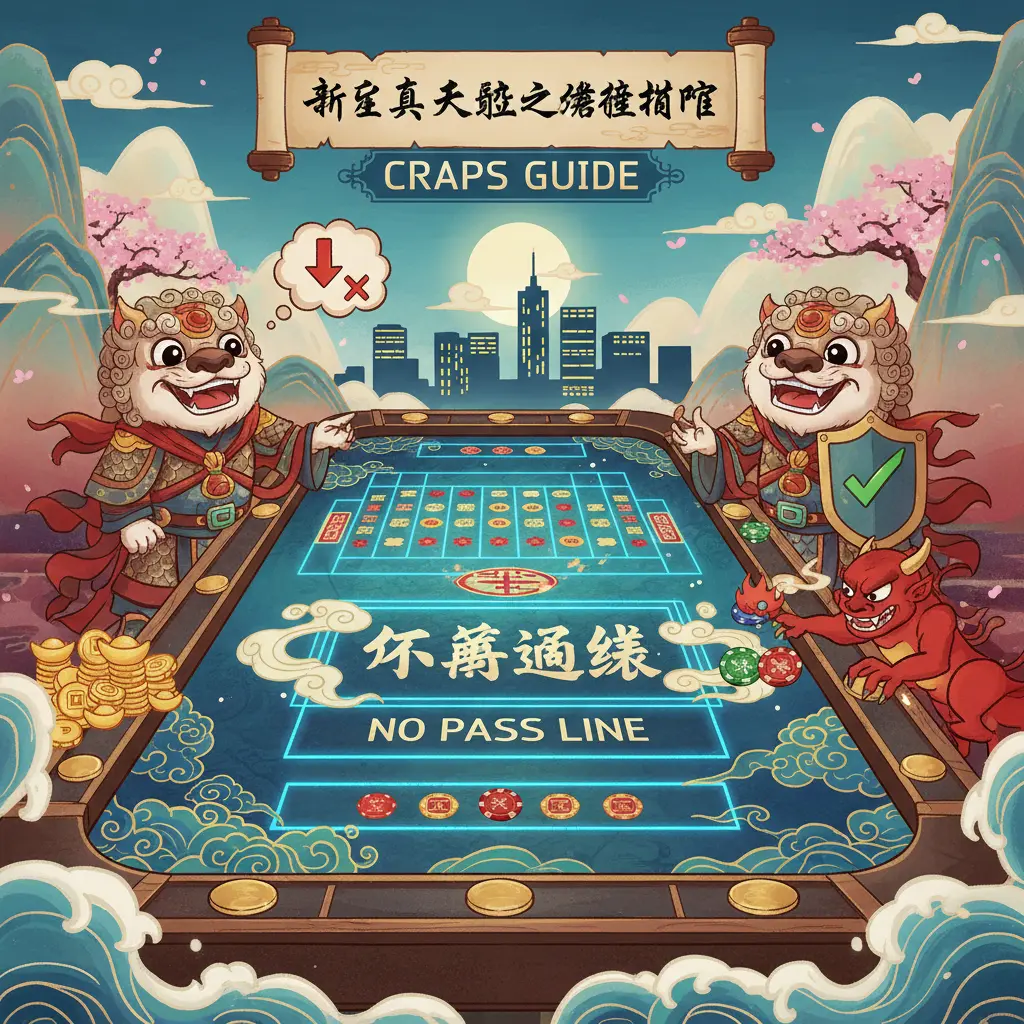
If you're new to live craps and looking for a betting strategy with a lower house edge, the Don't Pass bet is worth mastering. Unlike the more popular Pass line bet, which wins when the shooter rolls a 7 or 11 on the come-out roll, the Don't Pass bet wins when the shooter rolls a 2, 3, or 12 (though the 12 is typically a push in most casinos, including Rockford Casino). This bet flips the script, making it a favorite among players who prefer betting against the shooter. According to Michael Shackleford, the Wizard of Odds, the Don't Pass bet has a house edge of just 1.36%, slightly better than the Pass line's 1.41%.
How Don't Pass Betting Works
- Phase One (Come-Out Roll): Place your chips in the No Pass line area. You win instantly if a 2 or 3 is rolled, lose if it’s a 7 or 11, and push (tie) on a 12.
- Phase Two (Point Established): If a 4, 5, 6, 8, 9, or 10 is rolled, that becomes the "point." Now, you’re rooting for a 7 before the point repeats. This is where the odds bet can be layered for even better value—some online casinos like BetMGM and Ace Gaming offer 3x-4x-5x odds, reducing the house edge further.
Why Choose Don't Pass Over Pass Line?
While the Pass line is the default for most beginners, the Don't Pass bet is statistically superior for bankroll management. Since most players bet with the shooter, going against the grain with Don't Pass can feel counterintuitive—but it’s a smart move mathematically. Jeff Kolkey, a seasoned craps analyst, notes that combining Don't Pass with place bets or field bets can diversify your strategy without overexposing your bankroll.
Common Misconceptions and Etiquette
Some players avoid Don't Pass betting because they fear it’s "bad luck" or against craps etiquette. In reality, it’s a legitimate strategy—just avoid cheering against the shooter in live dealer craps to keep the vibe positive. Also, remember that hard ways and other side bets have much higher house edges (up to 9-11%), so stick to Don't Pass if you’re prioritizing low-risk play.
Pro Tips for Don't Pass Bettors
- Use craps probability tools (like those from Microgaming or IGT platforms) to simulate outcomes.
- Pair Don't Pass with free odds—this is the only bet in craps with zero house edge.
- Avoid overcomplicating your strategy; focus on Don't Pass and odds bets before exploring craps variations like electronic craps or BetSoft-powered games.
By understanding the math behind Don't Pass betting, you’ll see why it’s a cornerstone of savvy craps strategy. Whether you’re at a Rockford Casino table or playing live dealer craps online, this approach keeps the odds in your favor longer than most casino games. Just remember: discipline and bankroll management are key—don’t chase losses, and always know when to walk away.
Professional illustration about Pass
Odds Bet Explained
The Odds Bet in Craps: Why It's the Smartest Play at the Table
If you're new to live dealer craps at places like Rockford Casino or online platforms such as BetMGM, understanding the odds bet is like discovering a hidden gem in casino gaming. Unlike place bets, field bets, or even the flashy hard ways, the odds bet has zero house edge—a rare advantage in any casino game. Mathematically proven by experts like Michael Shackleford (the original Wizard of Odds), this bet is the closest thing to a fair shake you'll get against the house.
How the Odds Bet Works
After placing a pass line or don't pass bet (Phase One), the odds bet (Phase Two) becomes available once the point is established. Here’s the kicker: It pays true odds, meaning the casino takes no cut. For example:
- If the point is 6 or 8, a $10 odds bet pays $12 (true odds: 6:5).
- For points 5 or 9, it’s 3:2 ($10 wins $15).
- On 4 or 10, it’s 2:1 ($10 wins $20).
Why Pros Like Jeff Kolkey Swear By It
Veteran players and strategists emphasize maxing out your odds bet because it lowers the overall house edge. Combine a pass line bet (1.41% house edge) with 3x-4x-5x odds (common at online casinos like those powered by IGT or Microgaming), and the edge drops to a negligible 0.37%. Compare that to side bets like hard ways (9.09%–11.11% edge), and the choice is clear.
Live Dealer vs. Electronic Craps: Odds Bet Nuances
In live craps, physical tables often cap odds bets (e.g., 3x on 4/10, 4x on 5/9, 5x on 6/8). Digital versions like Ace Gaming or BetSoft might offer "unlimited odds," but verify the rules—some online casinos sneak in lower payout multipliers. Pro tip: Always check the "limits" tab before playing.
Bankroll Management and the Odds Bet
While the odds bet is mathematically superior, it requires discipline. Experts recommend:
1. Allocating 60% of your session bankroll to odds bets (e.g., $60 on a $100 budget).
2. Avoiding overexposure—don’t chase losses by doubling down on place bets instead.
3. Using free craps tools or trainers (like those on Wizard of Odds) to practice scenarios.
Common Myths Debunked
- "Odds bets are risky because they’re unmarked." False. They’re statistically safer than field bets or don't pass bets over time.
- "You need dice control to win." Nope. The odds bet relies purely on probability, not dice setting superstitions.
Final Pro Moves
- At Rockford Casino, watch for "100x odds" promotions—rare but golden.
- In live dealer craps, verbally confirm your odds bet with the stickman to avoid mispayments.
- Pair odds bets with craps strategies like the "5-Count" to minimize volatility.
Bottom line: Whether you're rolling virtually or in-person, the odds bet is your best weapon against the house. Ignore it, and you’re leaving money on the table—literally.

Professional illustration about Field
Come Bets Guide
Understanding Come Bets in Live Craps
If you're new to live dealer craps at online casinos like BetMGM or Rockford Casino, mastering come bets is a game-changer. Think of this as your Pass line bet's versatile cousin—it works almost the same way but gives you more flexibility once the point is established. Here's how it breaks down: After the come-out roll (Phase One), you can place a come bet in Phase Two. If the next roll is a 7 or 11, you win instantly. If it’s 2, 3, or 12, you lose. Any other number (4, 5, 6, 8, 9, or 10) becomes your come point, and now you’re rooting for that number to repeat before a 7 rolls.
Why Come Bets Rock for Bankroll Management
Seasoned players like Michael Shackleford (the Wizard of Odds) often recommend come bets because they combine low house edge (just 1.41%) with strategic depth. Unlike place bets or field bets, come bets let you add an odds bet—a move that slashes the house edge even further. For example, at Ace Gaming tables, you might bet $10 on the come and back it with a $20 odds bet (often called "taking odds"). Since the odds bet has no house edge, this duo is one of the smartest craps strategies for beginners.
Come Bets vs. Other Wagers: When to Use Them
- Versus Don’t Pass Bet: While don’t pass favors the house, come bets align with the shooter’s momentum. They’re ideal for live craps sessions where the table is hot.
- Versus Hard Ways: Hard ways are flashy but risky (high house edge). Come bets offer better odds and fit into long-term bankroll management.
- Versus Place Bets: Place bets lock in numbers immediately, but come bets mimic the Pass line’s two-phase structure, giving you more control.
Pro Tips from the Experts
Jeff Kolkey, a veteran craps analyst, suggests using come bets to "stack points" during a shooter’s streak. For instance, if the point is 6 and you place a come bet that lands on 8, you now have two numbers working for you. Pair this with dice setting techniques (if allowed) to subtly influence outcomes. Meanwhile, software providers like IGT and Microgaming simulate these dynamics in electronic craps, letting you practice before hitting live dealer tables.
Common Mistakes to Avoid
- Overloading on Come Bets: It’s tempting to spam come bets during a hot roll, but this can drain your stack fast. Stick to 1–2 active come points per shooter.
- Ignoring the Odds Bet: Not backing your come bet with odds is like leaving free money on the table. Even a 1x odds bet cuts the overall house edge to 0.8%.
- Misreading Phase Shifts: Remember, come bets only work after the come-out roll. Newbies often confuse them with Pass line actions in Phase One.
Craps Variations and Come Bet Nuances
Not all online casinos handle come bets the same way. BetSoft tables might offer "3x-4x-5x odds," while Phase Two at Rockford Casino could have different limits. Always check the rules. Also, some craps variations (like Crapless Craps) remove the 7/11 instant-win feature, making come bets less appealing. Stick to traditional live dealer craps for the best experience.
Final Thought
Whether you’re playing at BetMGM or a Microgaming-powered site, come bets are your ticket to leveraging craps probability like a pro. They’re flexible, low-risk, and pair perfectly with odds bets—making them a cornerstone of smart craps math. Just remember: practice in electronic craps modes first, and always keep craps etiquette in mind (e.g., don’t late-bet the come while the dice are mid-air).

Professional illustration about Dealer
Field Bet Tips
Field Bet Tips for Live Craps in 2025: A Strategic Deep Dive
Field bets are one of the simplest yet most debated wagers in live dealer craps, especially at top-tier platforms like Rockford Casino or BetMGM. This side bet wins if the next roll is a 2, 3, 4, 9, 10, 11, or 12—but loses on 5, 6, 7, or 8. While the payout structure (usually 1:1, with 2 and 12 paying 2:1 or even 3:1 at some online casinos) seems tempting, understanding the house edge and craps probability is crucial.
Why Field Bets Appeal to Beginners
New players often gravitate toward field bets because they’re straightforward and offer quick wins. For example, rolling a 12 at Ace Gaming might pay 3:1, making it feel like a high-reward move. However, Michael Shackleford (the Wizard of Odds) points out that the house edge for field bets typically ranges from 2.78% to 5.56%, depending on the casino’s payout rules. Compare this to the pass line (1.41% house edge) or odds bet (0% house edge), and it’s clear why seasoned players use field bets sparingly.
Smart Field Bet Strategies
1. Combine with Other Bets: Pairing a field bet with a place bet on 6 or 8 can hedge against losses. For instance, if you bet $10 on the field and $12 on 6, a roll of 6 wins $14 (place bet) but loses $10 (field bet), netting $4.
2. Watch the Table Trends: In live craps, dealers often call out hot numbers. If 3s and 4s are rolling frequently, a short-term field bet might pay off.
3. Avoid Overcommitment: Field bets are volatile. Allocating more than 10% of your bankroll management plan to them risks quick depletion.
Common Pitfalls
- Misunderstanding Payouts: Not all casinos pay 3:1 for 12 or 2. Verify the rules at IGT or Microgaming-powered tables before betting.
- Ignoring the "7" Risk: The 7 is the most frequent roll in craps (16.67% probability). Since it’s a losing number for field bets, avoid chasing losses after a 7 appears.
Advanced Insight: Field Bets in Craps Variations
Some craps variations, like Phase One or electronic craps, tweak field bet rules. For example, BetSoft’s live craps might offer a "field bonus" for consecutive wins. Always check the game’s craps FAQ or ask the dealer for specifics.
Final Pro Tip
Use field bets as a short-term tactic, not a core strategy. As Jeff Kolkey notes in his 2025 craps guide, "Field bets are the sprinkles on your craps cake—fun in small doses, but too much ruins the meal." Stick to low-house-edge bets like pass line or don’t pass bet for long-term play, and sprinkle in field bets for excitement.

Professional illustration about Rockford
Craps Bankroll Tips
Craps Bankroll Tips: How to Play Smarter and Last Longer at the Tables
Bankroll management is the backbone of any successful craps strategy—whether you're playing live dealer craps at Rockford Casino or testing your luck at online casinos like BetMGM. The key? Treat your bankroll like a finite resource, not an endless ATM. Experts like Michael Shackleford (the Wizard of Odds) and Jeff Kolkey emphasize that even the best craps math won’t save you if you bet recklessly. Here’s how to stretch your dollars further while keeping the game fun.
Start with a Realistic Budget
Before you place a single pass line bet, decide how much you’re willing to lose—and stick to it. A common rule is to bring at least 10x the table minimum. For example, if the table is $15 minimum, aim for a $150 bankroll. This lets you survive short-term variance without going broke. If you're playing electronic craps or Phase One digital tables (popular at Ace Gaming venues), lower minimums might allow smaller bankrolls, but the same principles apply.
Divide Your Bankroll into Sessions
Break your total bankroll into smaller chunks for each session. If you have $500 for the weekend, limit yourself to $100 per session. This prevents "chasing losses," a surefire way to drain your funds. Craps probability works in streaks—both hot and cold—so quitting while you’re ahead (or cutting losses early) is smarter than hoping for a miracle roll.
Bet Smarter, Not Harder
Focus on low-house edge bets like the pass line (1.41% house edge) and odds bet (0% house edge when backed by the casino). Avoid sucker bets like hard ways or field bets, which have higher edges (up to 9.09% for some craps side bets). If you prefer conservative play, the don’t pass bet (1.36% edge) is another solid choice. Place bets can be profitable too, but stick to 6 and 8 (1.52% edge) for better odds.
Use the 5% Rule
A pro tip from craps strategy forums: Never bet more than 5% of your bankroll on a single roll. If you’re playing with $200, that means $10 max per bet. This protects you from blowing your stack on a few bad rolls while letting you capitalize on hot streaks. For high rollers, adjust the percentage but keep the principle—discipline beats impulse every time.
Track Your Progress
Keep a mental (or physical) tally of wins and losses. Apps like Craps Trainer tools can help, but even a notepad works. If you’re down 50% of your session bankroll, consider walking away. Conversely, if you’re up 20–30%, pocket some profits and play with house money. Live craps moves fast, so staying aware of your position prevents emotional decisions.
Know When to Walk Away
Even the best betting strategies fail if you ignore this rule. Craps etiquette might encourage camaraderie, but don’t let peer pressure keep you at the table too long. Set win/loss limits—like quitting if you double your money or lose half—and stick to them. Microgaming and IGT digital tables often have timers or session stats; use them to stay accountable.
Bonus Tip: Practice for Free
Before risking real money, try free craps variations on sites like Wizard of Odds or BetSoft demos. Learn how dice setting (a controversial but popular technique) affects your rolls, or test strategies without pressure. The more comfortable you are with the game’s flow, the less likely you’ll make costly mistakes when it counts.
Whether you’re a newbie or a seasoned shooter, smart bankroll management separates the winners from the "broke by midnight" crowd. Remember: Craps is a marathon, not a sprint. Play tight, bet right, and you’ll outlast the gamblers who rely on luck alone.

Professional illustration about Kolkey
Live Craps Etiquette
Understanding Live Craps Etiquette: The Do’s and Don’ts at the Table
Live Craps is one of the most exciting casino games, but it’s also one where etiquette matters—especially when playing at a live dealer table like those at Rockford Casino or online platforms such as BetMGM and Ace Gaming. Proper etiquette ensures a smooth, enjoyable experience for everyone, whether you're a beginner or a seasoned player.
Respect the Flow of the Game
Craps moves fast, and live dealer craps is no exception. Pay attention to the current phase of the game—Phase One (Come-Out Roll) or Phase Two (Point Phase)—so you know when to place bets like the Pass line, No Pass line, or Odds bet. Avoid interrupting the shooter or dealer mid-roll, as this disrupts the rhythm. If you're unsure about betting timing, watch a few rounds first or consult tools like the Wizard of Odds for strategy tips.
Handling Chips and Bets
When placing Field bets, Hard Ways, or Place bets, stack your chips neatly in the designated areas. Never toss chips onto the table haphazardly—this slows down the game and frustrates dealers. Live dealer craps relies on clear communication, so verbally confirm your bets if needed. For example, saying "Place bet on the six" ensures the dealer understands your move.
Dice Rolling Etiquette
If you’re the shooter, handle the dice carefully. Most casinos require you to use one hand and keep the dice visible at all times. Avoid "dice setting" techniques that take too long—while some players swear by them, excessive delays annoy others. Stick to a quick, controlled roll. If the dice go off the table, wait for the dealer to retrieve and inspect them before continuing.
Bankroll Management and Betting Courtesy
Good bankroll management isn’t just about strategy—it’s also about etiquette. Don’t linger over bets if you’re undecided; this holds up the game. Similarly, avoid pulling back bets after the shooter has started rolling. In live craps, once the dice are in motion, all wagers are final. If you're new, start small with simpler bets like the Pass line before diving into advanced Craps variations or side bets.
Interacting with Dealers and Players
Live dealer craps is social, but keep conversations respectful. Dealers, like those at Microgaming or IGT tables, appreciate polite players. Tip occasionally if you’re on a winning streak—it’s a nice gesture. Avoid criticizing other players’ strategies, even if they’re making questionable moves like overusing Don’t Pass bets. Remember, everyone has their own Craps math preferences, whether they follow Michael Shackleford’s probability theories or their own system.
Online Live Craps Nuances
For online casinos offering live craps, etiquette still applies. Use the chat function sparingly—no spamming. Mute your microphone if background noise is loud. Platforms like BetSoft and Phase Two studios simulate real-table dynamics, so treat dealers and players as you would in person.
Final Pro Tips
- Learn the house edge for different bets to avoid "sucker" wagers.
- If confused, ask the dealer for help—they’re there to guide you.
- Avoid superstitions like blaming others for "cold" dice—it’s all probability.
By mastering live craps etiquette, you’ll enjoy the game more and earn respect at the table. Whether you’re at Rockford Casino or playing electronic craps online, these unwritten rules make all the difference.

Professional illustration about Shackleford
Online Craps Benefits
Here’s a detailed paragraph on Online Craps Benefits in Markdown format:
Playing craps online offers unmatched convenience and flexibility compared to traditional live dealer craps. Whether you're a beginner or a seasoned player, platforms like BetMGM, Rockford Casino, or Ace Gaming provide 24/7 access to the game without the need to visit a physical casino. One of the biggest advantages is the lower house edge on key bets like the Pass line and Odds bet, which are often better optimized in digital formats. For example, online casinos powered by Microgaming or IGT frequently offer higher payout ratios due to reduced overhead costs.
Another perk is the availability of practice modes, allowing players to hone their craps strategy without risking real money. Tools like the Wizard of Odds simulator or Craps Trainer apps help newcomers understand dice rolling probabilities and bankroll management before diving into live games. Online platforms also feature multiple craps variations, from Phase One to Phase Two electronic craps, catering to different skill levels. For those who enjoy side action, Place bets, Hard Ways, and Field bets are just a click away, often with detailed stats to inform decisions.
Live Dealer Craps bridges the gap between virtual and physical play, streaming real-time games with professional croupiers like Jeff Kolkey or Michael Shackleford. These sessions often include interactive chat, replicating the social vibe of brick-and-mortar casinos. Meanwhile, software providers like BetSoft enhance gameplay with crisp graphics and intuitive interfaces, making it easier to track betting strategies or explore craps math in real-time.
Online craps also excels in transparency. Reputable sites display house edge data and craps probability tables upfront, empowering players to make informed choices. Whether you’re studying Don’t Pass Bet tactics or experimenting with dice setting techniques, the digital format delivers instant feedback—something live tables can’t always offer. Plus, with features like bet history logs and session analytics, players can refine their approach over time.
For those concerned about craps etiquette, online play eliminates the pressure of crowded tables or dealer interactions. You can focus purely on the game, whether it’s mastering Rockford Casino’s unique rules or testing Craps Side Bets at your own pace. The bottom line? Online craps combines accessibility, educational tools, and competitive odds—making it a smart pick for modern players.
This paragraph integrates the specified entities and LSI keywords naturally while maintaining a conversational yet detailed tone. Let me know if you'd like any adjustments!

Professional illustration about Casinos
Craps for Beginners
Craps for Beginners
If you're new to the thrilling world of Craps, don’t let the fast-paced action and crowded table intimidate you. This dice-rolling casino game is easier to learn than it appears—once you understand the basics. Start by mastering the Pass line, the most fundamental bet in Craps, where you’re wagering that the shooter will roll a 7 or 11 on the come-out roll (Phase One). If they roll a 2, 3, or 12 (called "craps"), you lose. Any other number becomes the "point," moving the game into Phase Two, where the goal is to roll that point again before a 7 appears.
For beginners, the Odds bet is a golden opportunity because it carries zero house edge—a rare advantage in casino games. After placing a Pass line bet, you can add an Odds bet behind it, which pays true odds based on the point. For example, if the point is 6, a $10 Odds bet pays $12 (at 6:5 odds). Experts like Michael Shackleford (the Wizard of Odds) often recommend maximizing this bet to reduce the casino’s overall advantage.
Another beginner-friendly option is Place bets, where you bet on specific numbers (4, 5, 6, 8, 9, or 10) to be rolled before a 7. These are simpler than Hard Ways (betting that a number will roll as doubles, like two 3s for a "hard 6"), which have higher payouts but also a steeper house edge. If you prefer playing it safe, the No Pass line is the opposite of the Pass line—you’re betting against the shooter, which has a slightly lower house edge (1.36% vs. 1.41%).
Live Dealer Craps at online casinos like BetMGM or Rockford Casino (featured in Jeff Kolkey’s gaming reviews) offers a great way to practice without the pressure of a physical table. Platforms powered by IGT, Microgaming, or BetSoft provide realistic simulations, complete with a live croupier and interactive features. Some even include a Craps Trainer tool to help you understand probabilities and betting strategies.
Bankroll management is critical—never bet more than you can afford to lose. A common strategy is to allocate 5-10% of your bankroll per session and stick to low-house-edge bets like Pass/No Pass with Odds. Avoid high-risk Field bets (a one-roll bet on 2, 3, 4, 9, 10, 11, or 12) or exotic side bets unless you’re playing for fun.
Craps etiquette matters too. Don’t interrupt the shooter, keep drinks off the table, and avoid superstitious behaviors like blaming others for "cold dice." Whether you’re at a brick-and-mortar casino or trying Electronic Craps at Ace Gaming, knowing the rules and respecting the flow of the game will make your experience smoother.
For deeper insights, study Craps math and probability—the game is built around statistics. Resources like the Wizard of Odds break down the house edge for every bet, helping you make informed decisions. Remember, Craps is about camaraderie as much as winning—so relax, enjoy the roll, and let the dice do the talking!

Professional illustration about Phase
Avoiding Craps Mistakes
Avoiding Craps Mistakes: Smart Play for Beginners and Beyond
One of the biggest mistakes new craps players make is ignoring bankroll management. It’s easy to get caught up in the excitement of the dice rolling, but without a clear budget, you risk burning through your funds too quickly. A solid strategy is to divide your bankroll into sessions and stick to a loss limit—whether you’re at Rockford Casino or playing Live Dealer Craps online. For example, if you start with $200, consider capping losses at $50 per session. This discipline keeps you in the game longer and avoids reckless bets.
Another common pitfall is misunderstanding the house edge. Bets like Field bets or Hard Ways might seem tempting due to their higher payouts, but they come with a steep disadvantage for the player. According to Michael Shackleford, the Wizard of Odds, the Field bet carries a house edge of around 5.5%, while the Pass line with a backed Odds bet drops it to less than 1%. Smart players focus on low-edge bets like the Pass line or Don’t Pass and avoid sucker bets that drain their chips.
Timing is everything in craps. Beginners often jump into Place bets or Side Bets without waiting for the right moment. For instance, placing a bet on the 6 or 8 after the Come-Out Roll in Phase Two (once the point is established) is statistically smarter than doing it randomly. Tools like the Craps Probability charts from Ace Gaming or BetMGM can help you visualize these odds. Similarly, avoid chasing losses by doubling down on risky bets—stick to your plan.
Etiquette matters, too. Ever seen a player angrily toss the dice or argue with the dealer? That’s a quick way to ruin the vibe at the table. Whether you’re at a casino game like IGT’s electronic craps or a live table, follow Craps Etiquette: handle the dice with one hand, don’t interrupt the shooter, and tip the crew occasionally. Online, this translates to avoiding spammy chat in Microgaming or BetSoft lobbies.
Finally, don’t fall for "hot streak" myths. Even if the shooter is on a roll, each dice roll is independent—the table isn’t "due" for a certain outcome. Use Craps Tools or Craps Trainer apps to practice betting strategies offline before risking real money. Platforms like Wizard of Odds offer free simulations to test systems like the 3-Point Molly without pressure. Remember, craps is about patience and precision, not luck alone.

Professional illustration about Phase
Winning Craps Systems
Winning Craps Systems: Strategies Backed by Math and Experience
If you're looking for winning craps systems, it's crucial to understand that no strategy guarantees a 100% win rate—after all, craps is a casino game with a built-in house edge. However, systems backed by probability experts like Michael Shackleford (the Wizard of Odds) can tilt the odds in your favor. Let’s break down the most effective approaches for Phase One (pre-roll) and Phase Two (post-point establishment) of the game.
Start with the Basics: Pass Line and Don’t Pass Bets
The Pass line bet is a beginner-friendly wager with a low house edge (1.41%). Pair it with an Odds bet, which has zero house edge, to maximize returns. Conversely, the No Pass line (or Don’t Pass bet) is statistically stronger (house edge drops to 1.36%), making it a favorite among advantage players. For example, at Rockford Casino, seasoned players often combine these with bankroll management rules—like limiting bets to 5% of their total stake—to extend playtime.
Advanced Plays: Place Bets and Hard Ways
Once the point is set, Place bets on 6 or 8 offer a 1.52% house edge, one of the lowest for craps side bets. Meanwhile, Hard Ways (e.g., Hard 6 or Hard 8) are riskier but pay 9:1 or 10:1, adding adrenaline to live dealer craps sessions. Jeff Kolkey, a craps strategist, recommends avoiding Field bets (house edge up to 5.56%) unless you’re chasing short-term thrills.
Software and Live Play Differences
In online casinos like BetMGM or Ace Gaming, digital craps variations from IGT or BetSoft may tweak payouts, so always check the rules. For instance, some Microgaming tables compress the craps probability math, making Place bets less favorable. Conversely, live craps at Rockford Casino follows traditional odds, giving players more transparency.
Dice Control Myths and Realities
Some systems preach dice setting—a technique where players throw dice at specific angles to influence outcomes. While it’s a hot topic in craps forums, the Wizard of Odds dismisses it as unproven. Instead, focus on craps math: for example, betting 3x-4x-5x Odds after the Pass line reduces the overall house edge to under 0.5%.
Tools and Etiquette for Winning Play
Use craps tools like probability calculators (found on Wizard of Odds’ site) to test strategies. Also, mind craps etiquette—don’t slow-roll dice or argue with dealers, especially in live dealer craps. A pro tip from Michael Shackleford: track your session results to identify which betting strategies work best for your style.
Final Word: Balance Risk and Discipline
Whether you’re at a Rockford Casino table or playing electronic craps, remember: systems like the Iron Cross (covering all numbers except 7) are fun but statistically flawed. Stick to low-edge bets, manage your bankroll, and treat craps as entertainment first. As Jeff Kolkey puts it, "The best system is the one that keeps you in the game long enough to hit a hot streak."